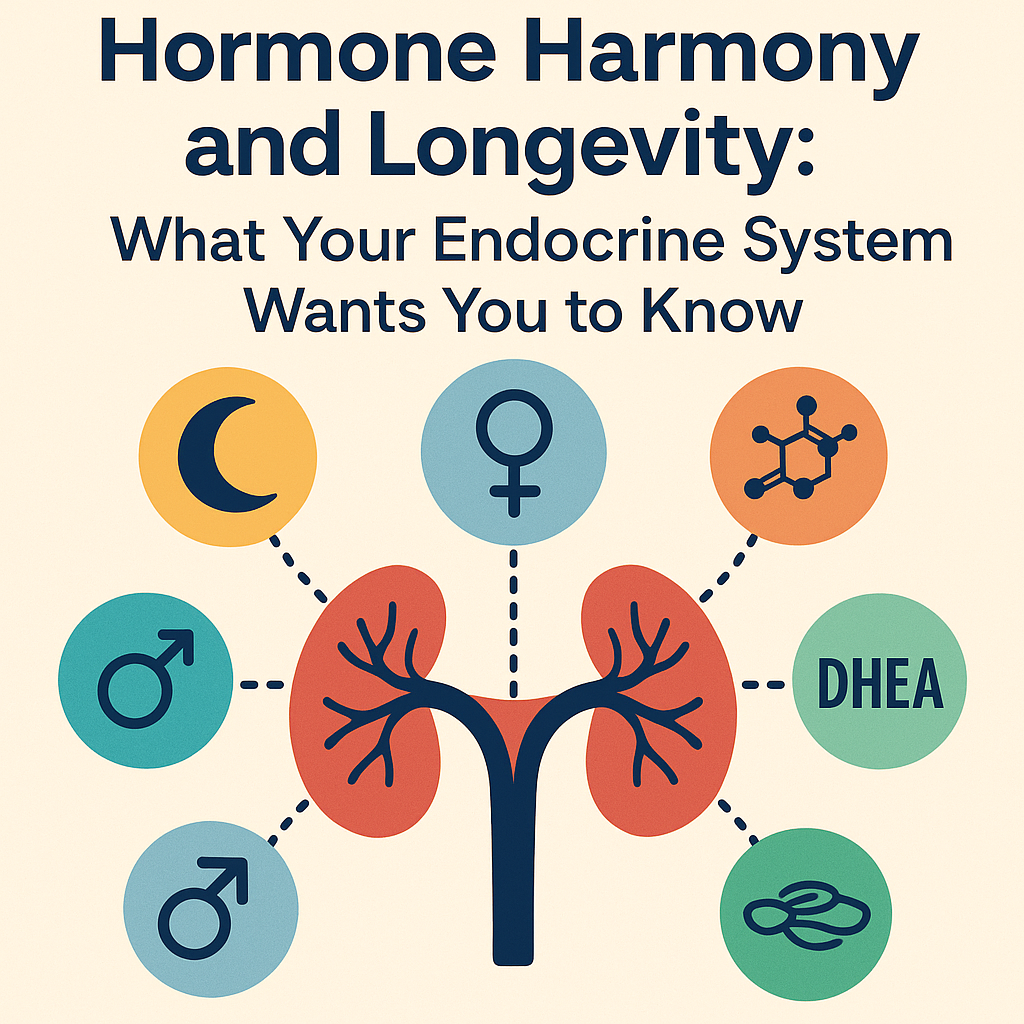
Ever feel like your body is running a complex orchestra, and sometimes the conductor is just… phoning it in? That maestro is your endocrine system, a network of glands churning out hormones, those powerful chemical messengers that regulate everything from your mood and sleep to your energy and how you age. As we journey through life, this hormonal symphony can hit some interesting notes, sometimes leading to imbalances that affect our well-being and potentially our longevity.
But fear not! Understanding these changes is the first step to supporting your body's natural rhythm. Let's dive into what your endocrine system wants you to know about aging, focusing on some key players: Testosterone, Estrogen, DHEA, Melatonin, and Cortisol. We'll also explore some natural strategies that may help keep your internal orchestra playing a harmonious tune.
The Aging Endocrine Orchestra: A Shift in the Score
Think of your younger years as a vibrant, high-energy performance. Hormones are abundant and follow predictable rhythms. As we age, the score changes. Levels of certain hormones decline, their rhythms flatten, and the delicate balance between different hormonal systems can shift. This isn't necessarily a disaster, it's a natural part of the aging process, but these changes are linked to many common age-related concerns, including changes in body composition, bone health, sleep, mood, and cognitive function.
Understanding which hormones are changing and how they might impact you is crucial for promoting healthy aging and potentially enhancing longevity.
Meet the Band Members (Hormones)
Testosterone: More Than Just Muscle
When you think Testosterone, you might immediately think of muscle mass and male vitality. While it certainly plays a role there, this hormone is important for both men and women and its decline with age, particularly in men, contributes to what's sometimes called a partial endocrine deficiency.
In older men, lower testosterone is linked to changes in body mass index, osteoporosis, sleep issues, and mood disorders. As men age, a protein called sex hormone binding globulin (SHBG) increases, which further reduces the amount of free (biologically available) testosterone.
The idea of testosterone supplementation to restore levels to a more youthful profile has been explored, with some potential benefits, such as improvements in sleep and cognitive function. However, it's not a simple fix. The association between testosterone therapy and prostate cancer remains unclear, and anyone undergoing such therapy requires careful monitoring.
Interestingly, in both men and women, testosterone is positively associated with S-Klotho. If you haven't heard of S-Klotho, it's a protein that scientists are quite interested in because it's linked to longevity. So, maintaining healthy testosterone levels might be playing a role in the bigger picture of healthy aging.
Estrogen: The Female Star, But Not Just Female
Estrogen, especially estradiol, is a dominant hormone in women and sees a notable decline as they age, particularly during menopause. This decline is strongly associated with many menopausal symptoms and can impact cognitive and metabolic functions.
The story is different for men. Estrogen levels do not show significant age-related changes in men. Routine examination or supplementation of estrogen is generally not recommended for men unless there are specific medical conditions.
Melatonin treatment in elderly women has been shown to further decrease estradiol concentrations. The clinical significance of this specific change, however, is not fully understood.
DHEA (Dehydroepiandrosterone): The "Mother" Hormone's Decline
DHEA and its sulfated form, DHEAS, are often referred to as "pro-hormones" because they can be converted into other hormones, including androgens and estrogens. These powerhouses see a marked decline with age in both men and women, mirroring the drops seen in testosterone and estradiol.
DHEA isn't just about making other hormones; it's directly involved in cognitive and behavioral functions. Enzymes that convert DHEA are highly expressed in brain regions critical for cognition. This has led to exploration of DHEA supplementation as a potential therapy for cognitive and behavioral disorders in the elderly.
Like testosterone, DHEAS also shows a positive association with S-Klotho in men, suggesting another potential link to healthy aging. Melatonin treatment can increase DHEAS levels and improve the DHEAS/cortisol ratio in elderly women. These hormones don't operate in isolation!
Melatonin: The Sleep Conductor Who Works Overtime
Melatonin, often called the "sleep hormone," is secreted by the pineal gland and is crucial for regulating our circadian rhythms, our internal body clock. As we age, melatonin secretion decreases and its crucial circadian rhythm flattens. This is particularly noticeable in individuals experiencing cognitive decline or dementia.
This age-related drop in melatonin is strongly associated with impaired sleep quality. Some researchers even suggest that changes in melatonin could serve as a biomarker for brain aging.
Melatonin supplementation in elderly women has been shown to improve sleep quality. It also increased IGF-I levels in the same studies. However, its effects on other hormones can be variable, and the overall clinical significance of age-related melatonin changes is still being investigated. Routine melatonin supplementation is not universally recommended.
Cortisol: The Stress Manager (or Mishandler?)
Cortisol, often dubbed the "stress hormone," is produced by the adrenal glands. Its levels and circadian rhythm also undergo changes with age. While the mean cortisol levels may generally decrease, the timing of the peak secretion can become altered.
A significant concern raised is the imbalance between cortisol (a catabolic, or breakdown, hormone) and anabolic androgens like DHEA. This imbalance may create a more neurotoxic environment in the brain, potentially affecting areas like the hippocampus and impacting cognitive functions.
Interestingly, for middle-aged adults, sleep quality is more closely linked to cortisol levels than to anabolic hormones. Poor sleep tends to be associated with higher cortisol, and this link appears particularly strong in women.
Good news for melatonin users in this context: Melatonin treatment does not significantly alter cortisol levels in elderly women. So, if melatonin helps your sleep, it's likely doing so without messing with your cortisol levels in a major way.
Harmony Helpers: Natural Strategies for Hormone Balance
While conventional hormone replacement therapies are an option for some and require careful medical guidance, many people are interested in supporting their endocrine system through lifestyle, diet, and natural supplements. There are several herbal and nutritional therapies that research suggests may play a role in supporting hormone balance during aging. These strategies generally aim to modulate endocrine function, reduce oxidative stress (a major contributor to aging), and alleviate some of the symptoms associated with age-related hormonal changes.
Ginseng (and related herbs): This ancient root is recognized for its anti-aging properties and its potential to modulate endocrine function. Research supports potentially improving Testosterone, DHEA, and Cortisol levels. Beyond hormones, ginseng has shown promise in improving cognitive and cardiovascular health in aging populations.
Curcuma longa (Turmeric): The vibrant spice that gives curry its color is noted for its estrogenic effects and potent antioxidant benefits. These properties may help to mitigate menopausal symptoms and support overall hormonal balance. Turmeric is also thought to support mitochondrial and cellular function, which is key for healthy aging.
Soy Isoflavones: Found in soy products, these compounds act as phytoestrogens, they can mimic the effects of estrogen in the body. This phytoestrogenic activity is particularly highlighted for its potential to alleviate menopausal symptoms. Soy isoflavones also offer antioxidant protection. Be careful with your sourcing of Soy and look for non-GMO, organic, and traditional forms of production.
Lycium barbarum (Goji Berry): These small red berries are championed for their anti-aging effects. They are mentioned for their potential to support sexual function and may influence DHEA and Melatonin regulation. Goji berries work through their significant antioxidant and anti-inflammatory mechanisms.
Vitamins C, E, and B-complex: These vitamins are critical nutritional antioxidants. They play a role in helping to maintain hormone balance, reduce oxidative stress, and support the function of hormones like Estrogen, Cortisol, and Melatonin, especially in the context of aging and menopause.
In summary, therapies like ginseng, turmeric, soy isoflavones, goji berry, and antioxidant vitamins hold promise in supporting and potentially improving levels of testosterone, estrogen, DHEA, melatonin, and cortisol in aging individuals.
Important Considerations
It's clear that the relationship between hormones, aging, and longevity is complex and fascinating. While the decline of hormones like testosterone, estrogen, and DHEA seems like a universal part of getting older, the changes in melatonin and cortisol add layers of complexity, particularly regarding sleep and cognitive health.
The interrelationships between these hormones are profound, for example, melatonin's effect on DHEAS and IGF-I in women, or the crucial balance between cortisol and DHEA for brain health.
Navigating age-related hormonal shifts can feel like a challenge, but understanding the process empowers you. Whether you're exploring potential supplementation or focusing on lifestyle and natural support, being informed and working with healthcare professionals is key. Your endocrine system is a vital partner in your longevity journey, learning its language helps you work together for a healthier future!